The Decision Line
Ten quick workplace scenarios. See your dominant pattern for handling AI-informed decisions, plus a one-page plan you can act on today.
About the book behind this diagnostic
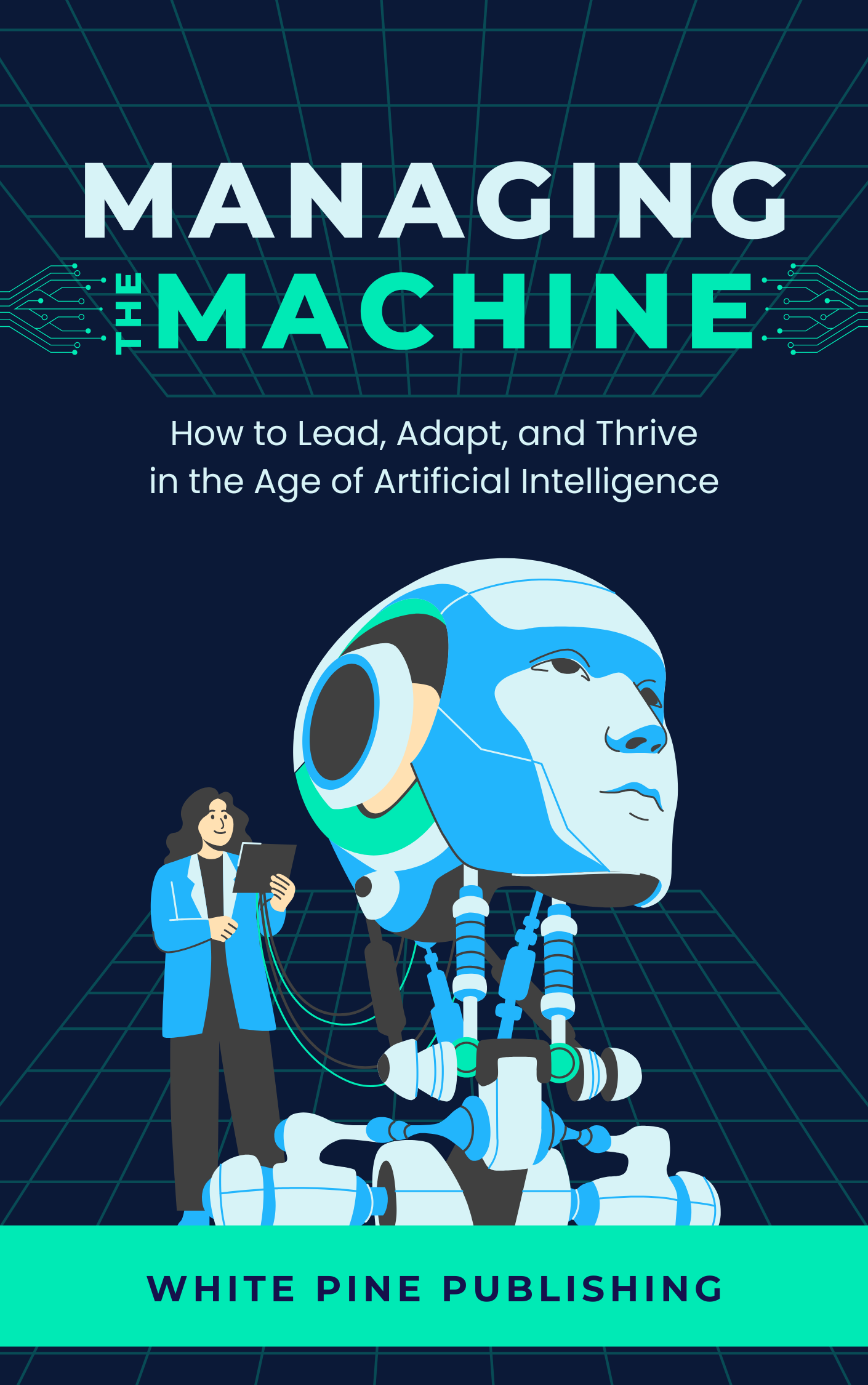
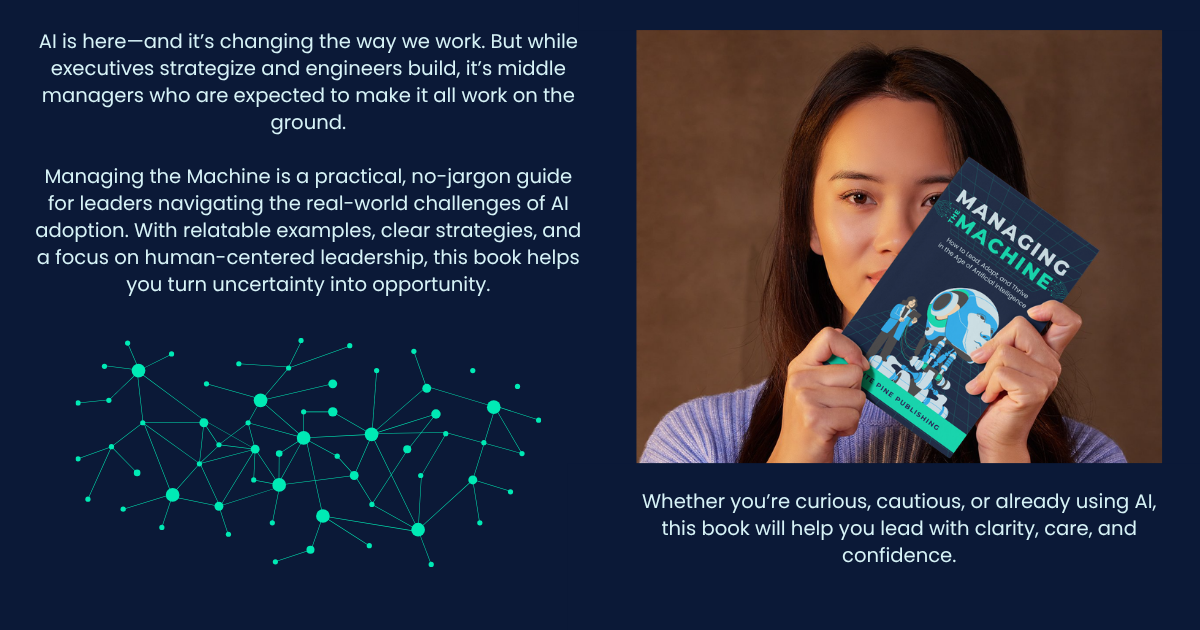
Managing the Machine is a practical, no-jargon guide written for the managers actually expected to make AI adoption work day to day, the ones between the executives setting strategy and the engineers building the tools. It walks through what changes when an AI ranking, score, or recommendation lands in front of a manager, and how that manager's response shapes a team's sense of fairness and psychological safety.
A recurring theme is that there's no single "right" amount of AI delegation. The book argues for being deliberate and transparent about wherever you land, rather than defaulting into a pattern by accident. This diagnostic is built directly from that framework: each scenario below is grounded in a real example or decision-point from the book.
Take the ten scenarios below to see your own pattern, then use Managing the Machine to go deeper on the chapters behind your result.
View Managing the Machine on AmazonQuestion 1 of 10
An AI tool ranks your team's performance, and one ranking doesn't match what you've seen.
You're introducing a new scheduling AI to your team.
Your lead-scoring tool downgrades an account a rep says they know well.
Your AI screening tool seems to be filtering out candidates with non-traditional backgrounds.
You're choosing between two new AI tools for the team.
You suspect someone on your team is using an AI tool "on the side," unsure if it's sanctioned.
An AI dashboard flags a dip in a team member's output.
Automating a task frees up several hours a week on your team.
Minutes before reporting quarterly numbers, your gut says something's off with an account, but the analytics platform already generated a different recommendation.
You're about to roll out a new AI-supported tool that's only been tested by people who work like you do.
Your result
Your Decision Line
What to keep, what to hand off, and where to set the rules, based on your result above.
Keep fully human
Delegate with light review
Delegate with an override rule set in advance
Want your Decision Line emailed to you, plus how it connects to Managing the Machine?
Thanks, check your inbox!
 Go deeper with Managing the Machine →
How this diagnostic works
Two dimensions, one result
Every scenario asks what you'd actually do, never how comfortable you feel with AI. Six of the ten scenarios track your Delegation Score (do you under-trust, balance, or over-trust the AI in the moment), and all ten track your Transparency Score (do you loop your team into how and why).
Your tier
Those two scores combine into one of four patterns: The Bottleneck, The Line-Setter, The Hands-Off, or The Quiet Operator. There's no single "correct" tier: the goal is seeing your actual default clearly enough to adjust it on purpose.
What this isn't
This diagnostic measures your own default pattern for handling AI-informed decisions: a personal mirror, not an organizational scorecard or a pass/fail test. Use it as a prompt for reflection or a team conversation, not a performance record.